
Definitely vs. Definately: Correct Spelling, Examples, and an Easy Memory Trick
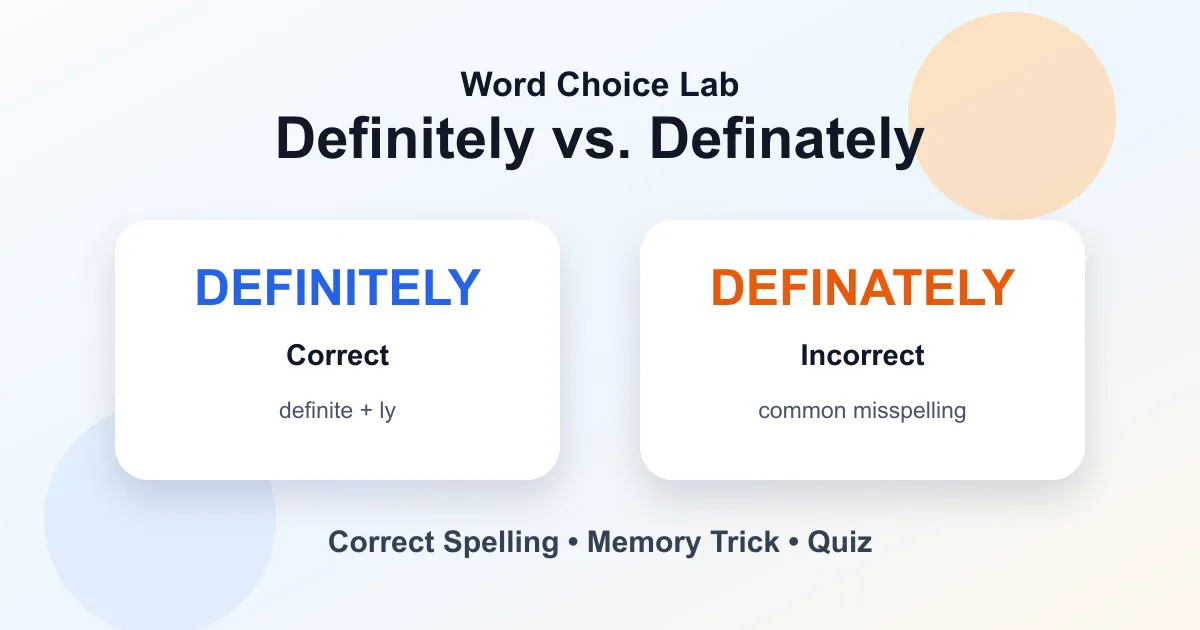
Definitely is the correct spelling. Definately is a common misspelling.
- Correct: I will definitely be there.
- Incorrect: I will definately be there.
The mistake happens because many people pronounce the middle of the word like “uh” or “ə,” so the spelling can feel unclear. But in careful writing, schoolwork, business emails, and SEO content, the standard spelling is always definitely with -ite-, not -ate-.
Definitely vs. definately at a glance
| Spelling | Status | Example |
|---|---|---|
| definitely | correct | I definitely agree. |
| definately | incorrect | Avoid definately in standard writing. |
Quick rule:
- Write definitely.
- Do not write definately.
- Remember the word finite inside definitely.
What does definitely mean?
Definitely means certainly, clearly, surely, or without doubt.
- I definitely want to join.
- She is definitely the right person for the job.
- This is definitely a better option.
- We should definitely check the schedule.
It often adds confidence or certainty to a sentence.
Examples:
- I am definitely ready.
- That answer is definitely correct.
- He will definitely call later.
- The new version is definitely easier to use.
If you mean “certainly” or “for sure,” the word you want is definitely.
Is definately a word?
No. Definately is not the standard spelling. It is a misspelling of definitely.
You may see definately in casual typing, old comments, social media posts, or text messages, but it should be corrected in polished writing.
Use definitely in:
- school essays
- blog posts
- professional emails
- resumes
- business documents
- website copy
- SEO articles
Spelling this word correctly matters because definately is one of those mistakes many readers notice immediately.
The easiest memory trick
Use this trick:
> Definitely contains finite.
Look at the spelling:
- de + finite + ly
- definitely
The correct spelling is definitely, not definately.
Another way to remember it:
> If something is definite, it is clear. Add -ly to definite: definitely.
So:
- definite → definitely
- not definate → definately
The base word is definite, not definate.
Why do people write definately?
People often write definately because the unstressed vowel sound in the middle of definitely is not always pronounced clearly.
Many speakers do not say every letter carefully. The middle syllable may sound closer to:
- “def-uh-nit-lee”
- “def-nit-lee”
- “def-in-it-lee”
Because the pronunciation is reduced, some writers guess the wrong spelling and write definately. But spelling follows the base word definite, so the correct form is definitely.
Definitely examples
Here are more sentences with definitely.
- I will definitely read that book.
- This recipe is definitely worth trying.
- She definitely knows what she is doing.
- The test was definitely harder than expected.
- We definitely need more time.
- That was definitely the best part of the trip.
In each sentence, definitely means certainly or without doubt.
Definately examples corrected
These examples show the common misspelling and the corrected version.
Incorrect:
- I definately want to go.
- This is definately important.
- She will definately call back.
- We should definately ask first.
Correct:
- I definitely want to go.
- This is definitely important.
- She will definitely call back.
- We should definitely ask first.
The meaning does not change, but the spelling must be corrected.
Definitely vs. defiantly
Another common confusion is definitely vs. defiantly.
Definitely means certainly.
- I definitely agree.
Defiantly means in a bold, resistant, or rebellious way.
- She defiantly refused to leave.
These words are very different.
| Word | Meaning | Example |
|---|---|---|
| definitely | certainly, without doubt | I definitely remember. |
| defiantly | rebelliously, boldly resisting | He defiantly ignored the order. |
Spellcheck may sometimes suggest defiantly when you misspell definitely, so always check the meaning.
Definitely vs. absolutely
Definitely and absolutely can both show strong agreement or certainty.
- I definitely agree.
- I absolutely agree.
Both are correct, but they are not always identical.
Definitely often means “without doubt.”
- The results are definitely improving.
Absolutely can sound stronger or more emphatic.
- That is absolutely unacceptable.
In everyday writing, they often overlap, but definitely is the word to use when you mean certain or sure.
Definitely in formal writing
Definitely is correct in formal writing, but it can sometimes sound conversational. In academic or very formal writing, you may choose a more precise phrase depending on the sentence.
Everyday:
- This is definitely a problem.
More formal:
- This is clearly a problem.
- The evidence strongly suggests a problem.
- This is certainly a problem.
Still, definitely is not wrong. It is simply a strong adverb that should be used when it adds real meaning.
Common mistakes
Mistake 1: Writing definately
Incorrect: I definately understand.
Correct: I definitely understand.
Mistake 2: Forgetting the base word definite
Incorrect idea: The base word is definate.
Correct: The base word is definite.
Correct chain:
- definite → definitely
Mistake 3: Accepting the wrong autocorrect suggestion
Incorrect: I defiantly want to help.
Correct: I definitely want to help.
Defiantly is a real word, but it means something different.
Mistake 4: Overusing definitely
Weak:
- This is definitely definitely important.
Better:
- This is definitely important.
- This is very important.
- This is essential.
Use definitely when it adds certainty, not as filler.
More example sentences
Correct use of definitely
- This is definitely the right address.
- I definitely saw the email yesterday.
- She is definitely improving.
- We should definitely leave early.
- The new design is definitely cleaner.
Incorrect spelling fixed
- Incorrect: The answer is definately yes.
- Correct: The answer is definitely yes.
- Incorrect: I definately need a break.
- Correct: I definitely need a break.
- Incorrect: That was definately unexpected.
- Correct: That was definitely unexpected.
Quick quiz
Choose the correct spelling.
- I will ___ attend the meeting.
- This is ___ the best choice.
- She ___ knows the answer.
- The correct spelling is ___.
- Avoid writing ___ in standard English.
Answers:
- definitely
- definitely
- definitely
- definitely
- definately
FAQ
Is it definitely or definately?
The correct spelling is definitely. Definately is incorrect.
Is definately a word?
No. Definately is a common misspelling of definitely.
Why is definitely spelled with i?
It comes from the base word definite. Add -ly to definite, and you get definitely.
What does definitely mean?
Definitely means certainly, clearly, or without doubt.
Is defiantly the same as definitely?
No. Defiantly means rebelliously or in a resistant way. Definitely means certainly.
The same context-first habit also helps with Lose vs. Loose and Onto vs. On To. For a wider set of examples in this topic, use the Spelling Confusions archive as the category grows.
Final tip
The correct spelling is definitely. Do not write definately.
Remember: definite + ly = definitely.