
Practice vs. Practise: American and British Spelling, Noun/Verb Rules, and Examples
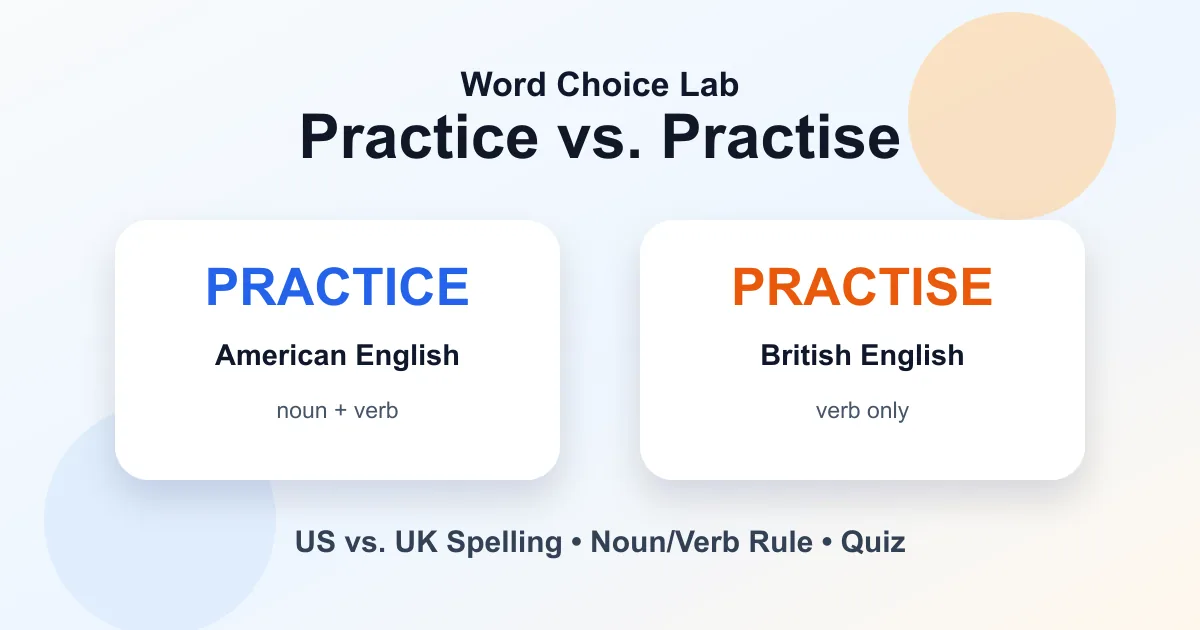
Practice is the standard spelling in American English for both the noun and the verb. In British English, practice is usually the noun, and practise is the verb.
- American noun: Basketball practice starts at 5 p.m.
- American verb: You should practice every day.
- British noun: Football practice starts at 5 p.m.
- British verb: You should practise every day.
This is one of the most useful American vs. British spelling pairs to learn because it follows a clear noun/verb rule in British English. If you are writing for a US audience, use practice for everything. If you are writing for a UK audience, use practice for the thing and practise for the action.
Practice vs. practise at a glance
| Variety | Noun | Verb | Example |
|---|---|---|---|
| American English | practice | practice | I have piano practice, so I need to practice. |
| British English | practice | practise | I have piano practice, so I need to practise. |
Quick rule:
- Writing for US readers? Use practice as both noun and verb.
- Writing for UK readers? Use practice as the noun and practise as the verb.
- If you can replace the word with advice, use practice. If you can replace it with advise, use practise in UK style.
When to use practice in American English
In American English, practice works as both a noun and a verb.
As a noun, practice means repeated training, a professional business, a habit, or a method.
- Soccer practice was canceled.
- Her daily writing practice improved her style.
- The doctor opened a private practice.
- This safety practice prevents accidents.
As a verb, practice means to repeat an activity in order to improve, or to work in a profession.
- You should practice the song slowly.
- He practices law in Chicago.
- The team practiced for two hours.
- She is practicing her speech.
For a US-focused website, practice is normally the correct spelling in both uses.
When to use practice in British English
In British English, practice is the noun.
- Piano practice helped her improve.
- The clinic is a small medical practice.
- It is good practice to save backup copies.
- The team had an extra practice before the match.
Think of practice as the thing, session, habit, business, or method.
Examples:
- The dentist has a busy practice.
- Daily practice builds confidence.
- This is standard practice in the industry.
When to use practise in British English
In British English, practise is the verb.
- You need to practise before the exam.
- She practises violin every morning.
- The players practised passing drills.
- He is practising medicine in London.
Think of practise as the action. If someone is doing the activity, use the verb spelling in UK style.
Examples:
- I want to practise my pronunciation.
- They practised the routine twice.
- She is practising for the debate.
Is practice or practise correct?
Both can be correct, but the answer depends on region and grammar.
- In American English, practice is both noun and verb.
- In British English, practice is the noun and practise is the verb.
This is similar to the British spelling rule for licence/license:
- Licence = noun in British English
- License = verb in British English
- Practice = noun in British English
- Practise = verb in British English
American English does not keep the spelling distinction for practice.
The advice/advise test
If you are using British English and feel unsure, compare practice/practise with advice/advise.
| If the meaning is like… | Use in British English |
|---|---|
| advice, thing, session, habit, business | practice |
| advise, action, do, rehearse, work professionally | practise |
Examples:
- Good practice is like good advice. Both are nouns.
- You practise like you advise. Both are verbs.
This memory trick is especially helpful because practice and practise sound the same in many accents.
Practice in medicine and law
This pair often appears in professional contexts.
In American English:
- She practices medicine.
- He practices law.
- She owns a medical practice.
- He joined a legal practice.
In British English:
- She practises medicine.
- He practises law.
- She owns a medical practice.
- He joined a legal practice.
The profession or business is the noun: practice. The act of working in that profession is the verb: practise in UK style.
Practice in sports, music, and study
For US style:
- I have baseball practice today.
- I need to practice my swing.
- She has violin practice after school.
- She will practice scales for thirty minutes.
For UK style:
- I have football practice today.
- I need to practise my passing.
- She has violin practice after school.
- She will practise scales for thirty minutes.
The session is practice. The action is practice in US style and practise in UK style.
Related words: practiced, practising, practicing
Related forms follow the same regional pattern.
| American English | British English |
|---|---|
| practice | practice/practise depending on noun or verb |
| practices | practices/practises |
| practiced | practised |
| practicing | practising |
Examples:
- American: She practiced every day.
- British: She practised every day.
- American: He is practicing law.
- British: He is practising law.
But the noun remains practice in both systems:
- American: daily practice
- British: daily practice
Common mistakes
Mistake 1: Using practise as a noun
Incorrect in standard UK style: I have football practise tonight.
Correct: I have football practice tonight.
Mistake 2: Using practise for a US audience
Incorrect for US style: You should practise before the test.
Correct for US style: You should practice before the test.
Mistake 3: Forgetting the UK noun/verb distinction
Incorrect in UK style: I need more practise, so I will practice tonight.
Correct in UK style: I need more practice, so I will practise tonight.
Mistake 4: Treating medical practice as a verb
Incorrect in UK style: She has practised a small clinic.
Better: She has a small medical practice.
Better as a verb: She practises medicine.
More example sentences
American English examples
- I have tennis practice after school.
- You need to practice your presentation.
- The lawyer practices in New York.
- Daily practice makes the skill easier.
- She is practicing for the concert.
British English examples
- I have tennis practice after school.
- You need to practise your presentation.
- The lawyer practises in London.
- Daily practice makes the skill easier.
- She is practising for the concert.
Quick quiz
Choose the best spelling for each sentence.
- US verb: You should ___ before the interview.
- UK verb: You should ___ before the interview.
- UK noun: Piano ___ starts at six.
- US noun: Piano ___ starts at six.
- UK verb: She is ___ medicine.
Answers:
- practice
- practise
- practice
- practice
- practising
FAQ
Is practise wrong in American English?
It is understandable, but practice is the standard American spelling for both the noun and the verb.
Is practice wrong as a verb in British English?
In standard British English, practise is usually the verb. Practice is the noun.
Which spelling should I use for a US website?
Use practice for both noun and verb: practice session, practice law, and practice every day.
Which spelling should I use for a UK website?
Use practice as the noun and practise as the verb: daily practice but practise daily.
Is practicing or practising correct?
Practicing is American spelling. Practising is British spelling.
The same context-first habit also helps with License vs. Licence and Defense vs. Defence. For a wider set of examples in this topic, use the American vs British English archive as the category grows.
Final tip
Use practice for both noun and verb in American English. In British English, use practice for the noun and practise for the verb.
Remember: US = practice for both, UK = practice noun, practise verb.